Drug Poisoning

Drug poisonings are a growing concern for public health and our community. They can harm people of all ages and backgrounds. This page shares up to date information about: 

  • drug poisonings,
  • toxic (unsafe) drug supplies, and
  • ways to prevent drug poisonings

Submit Drug Poisoning Information

Anonymously share information about drug poisonings/overdoses in your community.

Drug Poisoning

Drug poisoning (also called an overdose) happens when a person has more of a drug (or combination of drugs) in their body than it can handle. This can happen with any drug. It can include, 

  • street drugs
  • prescription medication or
  • over-the counter drugs

Today, many unregulated drugs are mixed with strong unknown substances.  This makes the drug supply unsafe and unpredictable. People may not know what they are taking. This can lead to drug poisoning, serious injury or death.

You can lower the chance of drug poisoning. This helps keep you and others safer. We can reduce harms from substance use by sharing clear information, offering support, and helping people use substances in safer ways.

Tips for Reducing Your Risk

Reverse an Opioid Overdose. Carry Naloxone.

It is also important to know that even if you reverse an opioid overdose using naloxone, you should still call 9-1-1 for emergency help. A person can overdose again when the naloxone wears off, even if they haven’t used more drugs, because the drug may still be in their body.
We often uses the term “drug poisoning” instead of “overdose.” We use this term because today’s drug supply is complex and often unknown, and people can be harmed by substances they did not expect.

The word “overdose” can suggest that a person knew the right amount to take and chose to take more on purpose. In many cases, this is not true.

The term “overdose” is still used in naloxone training, because it describes what happens in the body when someone has more opioids than their body can handle.

Lakelands Public Health provides harm reduction supplies and services that can help prevent the spread of infections and diseases. Availability of supplies varies based on office location. We also promote Needle safety, including the proper disposal of used needles and the significance of using safe supplies. 

For more information, visit out Needle Exchange and Harm Reduction Program or the Ontario Harm Reduction Distribution Program.

Find a program in your area that provides an outpatient or inpatient treatment option that fits your needs.

The province is ensuring that Ontarians receive the care they need, when and where they need it.

ConnexOntario provides free and confidential health services for people dealing with:

  • Alcohol and drug
  • Mental illness 
  • Gambling

They help connect you to services in their community that best match their treatment needs. These include outpatient day/evening programs and bed-based support, which requires individuals to live in residence at treatment centres.  You can connect with someone for information and referral to services in your community 24 hours a day, seven days a week by:

On the ConnexOntario website you can find locations and hours for some of these services and information on:

Rapid Access Addiction Medicine clinics 

RAAM clinics help people with substance use concerns

  • No appointment needed
  • No referral is needed
  • You can get prescriptions for opioid agonist therapies (such as suboxone or methadone)
  • Counselling referrals if you don’t have a primary care provider

Breaking Free online
Register with Breaking Free for a free and confidential recovery support program.
It helps you:

  • Learn positive coping skills 
  • Learn proven behaviour change techniques
  • Help reduce risky opioid use. 

Speak to your doctor, nurse practitioner, other health care provider, or our harm reduction program about connecting you to the right supports.

If chronic pain plays a role in your opioid use, you may be a candidate for a referral to one of Ontario’s 18 chronic pain clinics. Talk to your doctor or nurse practitioner to see if this would be a good option for you.

If you need help finding a doctor, nurse practitioner or other health care provider, visit Health811 online or call 8-1-1 to speak with a registered nurse available 24 hours a day to help with any non-emergency health matter and find local services in your area.

Narcotics Anonymous (NA)  holds meetings in person and/or online throughout our region. They offer recovery from the effects of addiction by working through a twelve-step program. The meetings offer an ongoing support network for people who wish to pursue and maintain a drug-free lifestyle.

How Can I Test my Drug Supply?

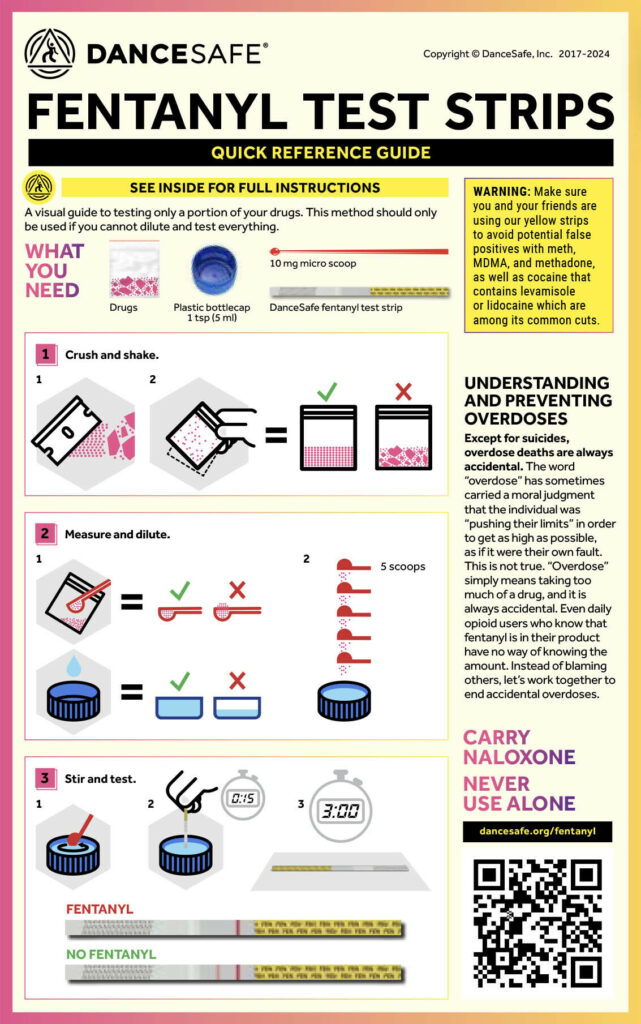
Lakelands Public Health offers test kits for fentanyl, xylazine, and benzodiazepines through outreach programs. These kits help you learn what may be in your drugs. Knowing this can help prevent poisoning/overdose.

Please contact your local Needle Syringe Program site to check if they carry these. 

Benzodiazepine test strip kits are available through outreach to help you understand what is in your drug supply.

Contents:

  • 5 Benzodiazepine test strips
  • 5 Micro scoops
  • 5 Mixing tubes
  • 5 Castile soap wipes
  • 10 Sterile water
  • 1 Education sheet 

For more information from the manufacturer: Benzodiazepine

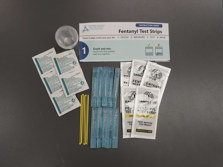
Fentanyl test strip kits are available through outreach to help you understand what is in your drug supply.

Contents:

  • 5 Fentanyl test strips
  • 5 Micro scoops
  • 5 Medicine cups
  • 5 Castile soap wipes
  • 10 Sterile water
  • 1 Education sheet 

For more information from the manufacturer: Fentanyl

**Please be aware that there is another brand of Fentanyl test strip: BTNX Fentanyl

Xylazine test strip kits are available through outreach to help you understand what is in your drug supply.

Contents:

  • 5 Xylazine test strips
  • 5 Micro scoops
  • 5 Medicine cups
  • 5 Castile soap wipes
  • 10 Sterile water
  • 1 Education sheet 

For more information from the manufacturer: Xylazine 

Sign up for Community Alerts

Subscribe to receive drug poisoning alerts via email. Alerts are reserved for life-saving information only.

Reverse an Opioid Overdose or Poisoning. Carry Naloxone.

Free Naloxone kits at participating locations

Toxic Supply: What You Need to Know

Drugs can be mixed with strong opioids and other toxic substances. This makes it hard to know what you are taking. Knowing about these drugs helps protect you and your community.

Lakelands Public Health provides harm reduction supplies (excluding Peterborough office) and services to help prevent the spread of infections and diseases.

Needle safety is important:

Reverse an Overdose. Carry free Naloxone kits that can be picked up at any of our offices.

Benzodiazepines are medicines that calm the brain, making you feel sleepy or relaxed. They are often prescribed for helping with sleep, seizures, or anxiety.

Benzodiazepines can be taken as:

  • Liquid
  • Tablet
  • Capsule 

What are the Risks?

Short-term effects of benzodiazepines:

The most common short-term side effects of benzodiazepines can include:

  • dizziness
  • confusion
  • drowsiness
  • constipation
  • memory loss
  • slurred speech
  • muscle weakness
  • loss of coordination and balance

Some people can also experience:

  • delusions or hallucinations
  • skin reactions
  • sudden anxiety
  • euphoria (a feeling of well-being)
  • restlessness and agitation
  • irritability and aggressiveness

Long-term effects of benzodiazepines can include:

  • physical dependence
  • problems learning or concentrating

Mixing benzodiazepines with other depressants such as alcohol and/or opioids can be dangerous. It increases the risk of overdose, because they all have sedative properties.

Fentanyl is a very strong  opioid pain reliever. Even a very small amount can lead to drug poisoning or death.

It's mostly used in hospitals, but  can be prescribe it for severe pain.

Fentanyl can be taken as:

  • Tablets
  • Shots
  • Patches on your skin

What are the Risks?

It's often mixed with other drugs, without people knowing. Using fentanyl with alcohol, benzodiazepines, or other opioids makes the risk of poisoning even higher. You might not even realize you're taking it because it has no smell or taste.

Medetomidine/Dexmedetomidine are sedative drugs used to calm or sedate.

Medetomidine is for animals only. Dexmedetomidine can be used on humans and animals, for sedation and pain relief.

Both drugs have similar chemical structures, and it is hard to tell them apart in drug testing.

What are the Risks?

Using strong opioids with medetomidine/dexmedetomidine is very dangerous. It slows down breathing, blood pressure, and heart rate.

Nitazenes are a type of very strong opioid. They are stronger than fentanyl. They were made for   pain relief but never approved for medical use. They were first identified in Canada’s unregulated supply in 2019. They are known on the streets as "pyro". 

What are the Risks?

  • Nitazenes are being found more often in Canada’s unregulated drug
  • Nitazenes, have been found in drugs that are expected to be lower-strength opioids (e.g., drugs acquired from the unregulated supply expected to be oxycodone, hydromorphone, Percocets). 
  • The risk of overdose is very high because they are so strong. This is especially true for people who do not use fentanyl or who have lower opioid tolerances.

Naloxone and Nitazenes

  • Nitazenes are opioids, so naloxone can reverse overdoses/poisonings.
  • More than one dose of naloxone may be needed
  • After giving naloxone, wait about 2 to 4 minutes to see if the person responds before giving another dose
  • give rescue breaths every 5 seconds if the person is not breathing
  • Fentanyl test strips DO NOT detect nitazenes.
  • Right now, it is not clear how well nitazene test strips or new on-site drug-checking tool can  detect nitazenes.  

Opioids are a group of drugs that help relieve pain. They can be prescribed by a doctor or bought illegally. Opioids slow down the body. They can slow breathing, heart rate, and blood pressure. They can also cause a “high” which can make them addictive.

Common types of opioids include: 

  • Fentanyl 
  • Morphine 
  • Codeine (found in Tylenol 2, Tylenol 3, Tylenol 4) 
  • Oxycodone (OxyContin) 
  • Heroin 
  • Hydrocodone (Vicodin) 
  • Hydromorphone (Dilaudid) 
  • Percodan (Percocet) 
  • Methadone

What are the Risks?

Opioids can help treat pain, but they also have risks.  They can cause addiction and overdose. Over time, a person may need more of the drug to feel the same effect. Stopping suddenly can cause  withdrawal and make someone feel very sick. Opioids can also affect your body and, mental health. They can impact your family life, work and money. There is also a risk of infectious diseases and death. It's important for healthcare providers to carefully think about the benefits and risks with each patient. Together, they can look at different ways to manage pain when possible. For more information visit our Opioids and Naloxone webpage.

Xylazine is a strong sedative that is not an opioid. It is used as a pain-reliever and a muscle relaxant. It has been found in Ontario’s drug supply. Commonly known as “tranq” or “tranq dope” when mixed with fentanyl. Wounds associated with xylazine use can take a long time to heal.

Xylazine can be:

  • Smoked
  • Snorted
  • Injected
  • Swallowed

What are the Risks?

Xylazine can cause:

  • difficulty breathing
  • loss of consciousness
  • lower heart rate and blood pressure
  • severe skin wounds and tissue damage that, if left untreated, may result in amputation. Our Port Hope, Lindsay, and Haliburton offices offer wound care kits.
  • higher risk of complex drug poisonings. It is often mixed with opioids, like fentanyl, which increases negative effects, such as decreased breathing and consciousness.
HKLN

Haliburton, Kawartha Lakes, Northumberland (HKLN) Drug Strategy

The purpose of the HKLN Drug Strategy is to facilitate a collaborative, evidence-based approach to minimize the risks and harms associated with substance use in the County of Haliburton, City of Kawartha Lakes, and Northumberland County, including Alderville First Nation.

Peterborough Drug Strategy

The Peterborough Drug Strategy (PDS) is a collective of community-based organizations in Peterborough City and County that actively work towards reducing the harms of substance use for individuals, families, and our community.

Need for more information?

Check out these related resources

Contact Our Team

We’re here to help. Reach out and we’ll respond as quickly as possible.