
- Check the beach water quality and weather conditions. Swimming during and 48 hours after rainfall is not recommended.
- Learn to Swim. Do not enter the water if there are doubts about swimming ability.
- Look for and read the safety signs. Always read and obey all posted signs. Lake conditions can change quickly, and the absence of a particular sign does not mean there is no threat to personal safety.
- Recognize hazards and dangers.
- Never swim alone, always swim with a buddy. The person you are with may be your only lifeline for help.
- Designate a Water Watcher. Stay within arm’s reach of children.
- Avoid swimming at night.
- Alcohol and water don't mix. Swim sober. Do not enter the water or go swimming while under the influence of alcohol or drugs.
- Feet first water entry, protect your neck. Reduce the risk of head injuries by entering unknown water feet first.
- Life Jackets Save Lives. Wear a lifejacket or personal flotation device.
- Beat the Heat & Block the Sun, wear sunscreen with SPF 30 or higher, apply every two hours and reapply before and after swimming.
- Stay hydrated. Drink plenty of water.
Beach Water Monitoring

Lakelands Public Health monitors beach water to ensure the safety and health of the community by detecting harmful contaminants and bacteria. Regular monitoring helps to prevent waterborne illnesses and protect the environment, allowing the public to enjoy recreational water activities with confidence.
NOTICE | Beach Water Monitoring
Beach water monitoring for the 2026 season has now concluded. Regular monitoring of designated public beaches will resume in June 2027. Thank you for helping keep our beaches safe and healthy throughout the summer.
Spotted a Blue-green Algae Bloom?
If you live or use a lake or waterway, be on the lookout for blue-green algae blooms. If you spot a bloom, report it to the Spills Action Centre at 1-866-663-8477.
Beach Water Monitoring
From mid-June to the end of August, when water temperatures are above 15°C, we monitor water quality at 76 public beaches across our region.
While beach water quality is monitored regularly, conditions can change at any time and bacteria may be present. Always swim at your own risk.
We use a three-colour system to report beach water quality:
| Risk Level | Status | What It Means |
|---|---|---|
| 🔴 High Risk | Beach is Closed | High bacteria levels or hazardous water conditions. DO NOT swim or enter the water. |
| 🟡 Moderate Risk | Swimming not Advised | Bacteria levels are elevated and may increase your risk of illness. |
| 🟢 Low Risk | Safe for Swimming | Water quality meets Ontario Guidelines. Swimming and wading are allowed. |
Check if a Beach is Open!
Click the location buttons below to find beach water testing results for the area you’re visiting.
County of Haliburton City of Kawartha Lakes Northumberland County City and County of Peterborough
City of Kawartha Lakes
Red High-Risk

The following beaches are moderate-risk:
Yellow - Moderate Risk

The following beaches are moderate-risk:
Green Low-Risk

The following beaches are low-risk:
Beach Water Monitoring Results Pending

The following beaches are awaiting test results.
Beach Park - Bobcaygeon Beach Monitoring Paused Until June 2027
Birch Point – Fenelon Falls Beach Monitoring Paused Until June 2027
Blanchards Road Beach - Bexley Beach Monitoring Paused Until June 2027
Burnt River Beach - Somerville Beach Monitoring Paused Until June 2027
Bond Street – Fenelon Falls Beach Monitoring Paused Until June 2027
Centennial Park West - Eldon Beach Monitoring Paused Until June 2027
Centennial Verulam Parkette Beach Monitoring Paused Until June 2027
Four Mile Lake Public Beach - Somerville Beach Monitoring Paused Until June 2027
Head Lake Beach – Laxton Beach Monitoring Paused Until June 2027
Lions Park - Coboconk Beach Monitoring Paused Until June 2027
Norland Bathing Area – Laxton Beach Monitoring Paused Until June 2027
Omemee Beach Beach Monitoring Paused Until June 2027
Riverview Beach Park - Bobcaygeon Beach Monitoring Paused Until June 2027
Sturgeon Point Beach – Fenelon Falls Beach Monitoring Paused Until June 2027
Valentia Sandbar Beach Beach Monitoring Paused Until June 2027
Verulam Recreational Park Beach Monitoring Paused Until June 2027
______________________________________________________________________________________________________________
City and County of Peterborough
Red High-Risk
The following beaches are high-risk:
Yellow Moderate-Risk
The following beaches are moderate-risk:
Green Low-Risk
The following beaches are low-risk:
Beach Water Monitoring Results Pending
The following beaches are awaiting test results.
Beavermead Beach - Peterborough Beach Monitoring Paused Until June 2027
Belmont Lake - Havelock-Belmont-Methuen Beach Monitoring Paused Until June 2027
Chandos Beach - North Kawartha Beach Monitoring Paused Until June 2027
Crowe's Line Beach - Trent Lakes Beach Monitoring Paused Until June 2027
Douro Park North - Douro-Dummer Beach Monitoring Paused Until June 2027
Ennismore Waterfront Beach - Selwyn Beach Monitoring Paused Until June 2027
Henry's Gumming - Curve Lake First Nation Beach Monitoring Paused Until June 2027
Hiawatha Beach - Hiawatha First Nation Beach Monitoring Paused Until June 2027
John Street Beach - Trent Lakes (Buckhorn) Beach Monitoring Paused Until June 2027
Jones Beach - Selwyn (Bridgenorth) Beach Monitoring Paused Until June 2027
Kasshabog Lake - Havelock-Belmont-Methuen Beach Monitoring Paused Until June 2027
Lakefield Beach - Selwyn Beach Monitoring Paused Until June 2027
Lime Kiln Park - Curve Lake First Nation Beach Monitoring Paused Until June 2027
Quarry Bay Beach - North Kawartha Beach Monitoring Paused Until June 2027
Sandy Beach - Trent Lakes Beach Monitoring Paused Until June 2027
Selwyn Beach Conservation Area - Selwyn (Owned by Otonabee Conservation) Beach Monitoring Paused Until June 2027
Squirrel Creek Conservation Area - South Monaghan (Owned by Otonabee Conservation) Beach Monitoring Paused Until June 2027
Warsaw Caves Conservation Area - Douro-Dummer (Owned by Otonabee Conservation) Beach Monitoring Paused Until June 2027
White's Beach - Trent Lakes Beach Monitoring Paused Until June 2027
Roger's Cove - Peterborough Beach Monitoring Paused Until June 2027
______________________________________________________________________________________________________________
County of Haliburton
Red High-risk
The following beaches are high-risk:
Yellow Moderate-Risk
The following beaches are moderate-risk:
Green Low-Risk
The following beaches are low-risk:
Beach Monitoring Results Pending
The following beaches are awaiting test results.
Bissett Beach - Minden Hills Beach Monitoring Paused Until June 2027
Dorset Parkette – Algonquin Highlands Beach Monitoring Paused Until June 2027
Eagle Lake Beach – Dysart et al Beach Monitoring Paused Until June 2027
Elvin Johnson Park – Algonquin Highlands Beach Monitoring Paused Until June 2027
Forsters Beach – Minden Hills Beach Monitoring Paused Until June 2027
Gooderham Lake Beach – Highlands East Beach Monitoring Paused Until June 2027
Glamour Lake Beach – Highlands East Beach Monitoring Paused Until June 2027
Haliburton Lake Beach – Dysart et al Beach Monitoring Paused Until June 2027
Horseshoe Beach – Minden Hills Beach Monitoring Paused Until June 2027
Paudash Lake Beach – Highlands East Beach Monitoring Paused Until June 2027
Pine Lake Beach – Dysart et al Beach Monitoring Paused Until June 2027
Rotary Beach Head Lake – Dysart et al Beach Monitoring Paused Until June 2027
Rotary Head Lake Beach Lagoon – Dysart et al Beach Monitoring Paused Until June 2027
Rotary Park Lagoon – Minden Hills Beach Monitoring Paused Until June 2027
Rotary Park Main – Minden Hills Beach Monitoring Paused Until June 2027
Sandy Cove Beach – Dysart et al Beach Monitoring Paused Until June 2027
Sandy Point Beach – Dysart et al Beach Monitoring Paused Until June 2027
Slipper Beach – Dysart et al Beach Monitoring Paused Until June 2027
Twelve Mile Lake Beach – Minden Hills Beach Monitoring Paused Until June 2027
Wilbermere Lake Beach – Highlands East Beach Monitoring Paused Until June 2027
______________________________________________________________________________________________________________
Northumberland County
Red High-Risk
The following beaches are moderate-risk:
Yellow Moderate-Risk
The following beaches are moderate-risk:
Green Low-Risk
The following beaches are low-risk:
Beach Water Monitoring Results Pending
The following beaches are awaiting test results.
Caldwell Street Beach – Port Hope Beach Monitoring Paused Until June 2027
Crowe Bridge Park – Trent Hills Beach Monitoring Paused Until June 2027
East Beach – Port Hope Beach Monitoring Paused Until June 2027
Hastings Waterfront South – Trent Hills Beach Monitoring Paused Until June 2027
Hastings Waterfront North – Trent Hills Beach Monitoring Paused Until June 2027
Little Lake – Cramahe Beach Monitoring Paused Until June 2027
Sandy Bay Public Beach - Alnwick-Haldimand Beach Monitoring Paused Until June 2027
Victoria Beach- Cobourg Beach Monitoring Paused Until June 2027
West Beach – Port Hope Beach Monitoring Paused Until June 2027
Wicklow Beach - Alnwick-Haldimand Beach Monitoring Paused Until June 2027
______________________________________________________________________________________________________________
Beach Sampling in Ontario Parks
Please refer to Beach Results for beach sampling results in Ontario Parks.
Cold water can become life-threatening within minutes. Sudden immersion can trigger cold water shock, causing an involuntary gasp, rapid breathing, and an increased heart rate. These reactions can make it difficult to stay afloat and significantly increase the risk of drowning.
With continued exposure, the body loses heat, reducing muscle strength, coordination, and swimming ability. This can lead to swim failure and hypothermia, a serious condition that affects consciousness and heart function.
The risk of drowning can develop quickly, even in calm water and among experienced swimmers. In Ontario, water temperatures can remain cold enough to pose a serious risk throughout much of the year, including during the summer.
Important: Survival times are only rough estimates. Cold shock, swimming failure, and drowning can occur before hypothermia develops, particularly in water below 15°C.
| Water Temperature | Risk |
| >20°C | Survival may last many hours |
| 10–15°C | Rapid loss of function and swimming ability |
| 0–5°C | Unconsciousness may occur within 1 hour |
Learn more about cold water safety:
There are a number of ways that beaches can become contaminated with bacteria. Storm water runoff, combined with sewer overflows, sewage treatment plant bypasses, agricultural runoff, faulty septic systems, and large populations of waterfowl like geese all contribute to water pollution which can result in beach postings.
Beach postings are most likely to occur after rain storms or prolonged hot weather. Rain water washes fecal material from cats, dogs, birds and other wildlife into storm sewers which flow directly into nearby rivers and lakes. Prolonged hot weather conditions promote the growth of the bacteria in the water.
Water temperature also has a significant effect on bacterial levels. Shallow beaches will have warmer water and a higher potential for bacterial growth.
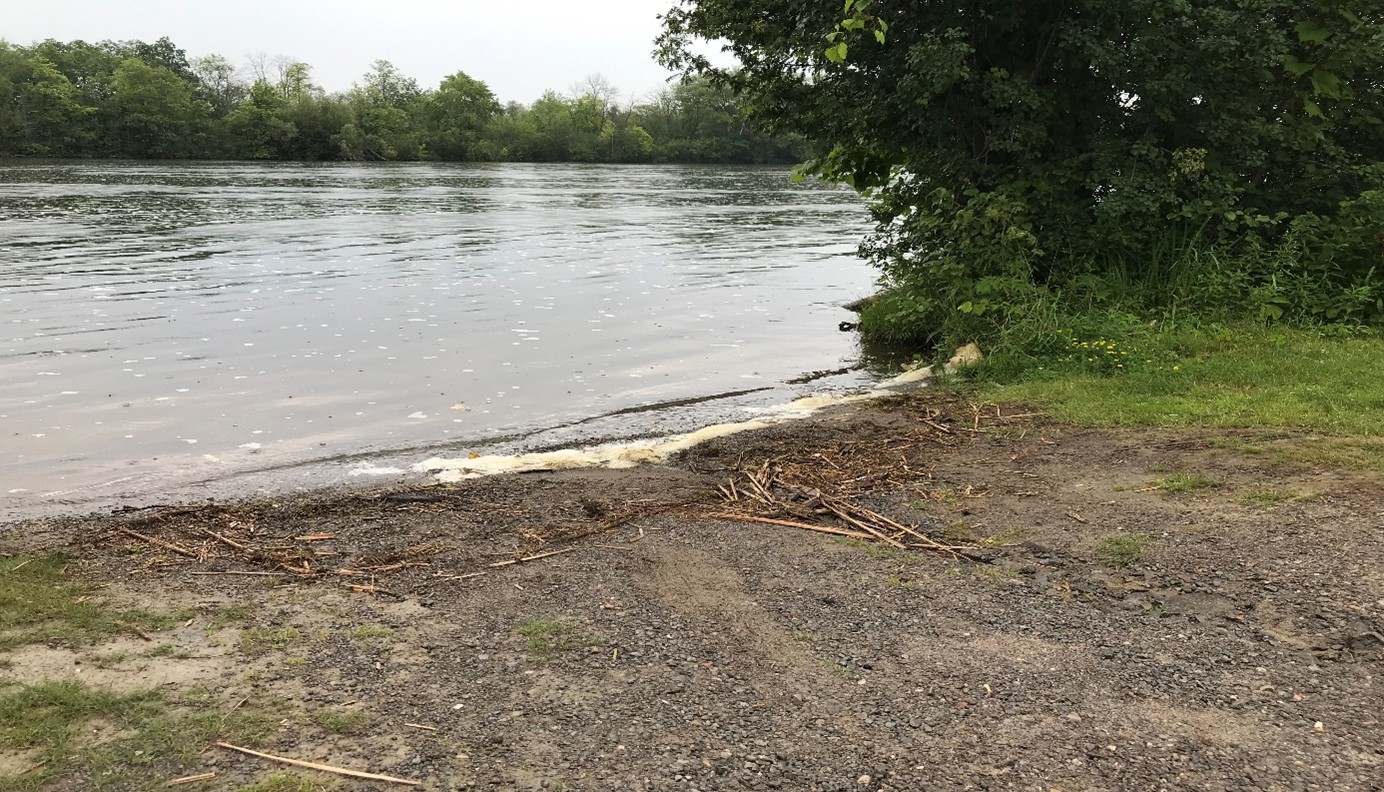
Foam
The foaming of surface waters on lakes is not a new phenomenon. It is a natural process that has been going on for a long time. All lakes contain organic matter, such as algae, rooted aquatic plants and leaves. When this organic matter decomposes, it releases cellular products to the water, which form a surfactant, or surface agent. A surfactant simply lessens the surface tension of water, making it susceptible to foaming. When the wind blows, the waves on the lake agitate this surface agent, thus transforming it into sudsy white foam.
Natural foam is most noticeable along beaches exposed to the prevailing wind direction. When the foam reaches the shoreline, it tends to form a loose line where it mixes with tiny pieces of organic matter, which act as a binding agent and give it stability.
Foam on the surface waters is a harmless by-product of our lakes. Its chemical makeup is 99% air and water, combined with 1% or less surfactant.
For more information contact your local Ministry of Environment, Conservation and Parks.
Bacteria and viruses are some of the most common contaminants found in beach water. Local beach waters are tested for E. coli bacteria, which is an indicator that there is fecal contamination present from animals, humans, or both. E. coli, as well as other disease-causing organisms, can cause intestinal illness or infections of the eyes, ears, nose, or throat.
To protect yourself and your family from the health hazards of contaminated beach water, it is important to be aware of water quality conditions and avoid swimming when the water quality is poor. It is also important to take precautions such as showering after swimming, and avoiding swallowing or coming into contact with the water. If you do experience any health symptoms after swimming in beach water, please seek medical attention.
You can play a role in making local beaches safer to use. Here are some suggestions on how to reduce water contamination:
- Pet owners should observe the “stoop and scoop” bylaws as domestic pet waste is a major source of bacteria in storm water.
- Allow water from eavestroughs to discharge onto lawns. This reduces the amount of rainwater going directly into the sewer system.
- Reduce household water use. This avoids capacity problems at sewage treatment plants that could result in untreated sewage entering lakes and rivers.
- Fence livestock away from streams and provide them with an alternative source of water. This will benefit both the health of the herd and the environment.
- Ensure that runoff from feedlots and manure piles are properly contained.
- Upgrade septic systems and keep them in good working order.
- Do not feed the birds.
- Do not let children swim in soiled diapers.
- Pick up your garbage.
Swimmer’s itch, also called cercarial dermatitis, appears as a skin rash caused by an allergic reaction to certain microscopic parasites that infect some birds and mammals. These parasites are released from infected snails into fresh and salt water (such as lakes, ponds, and oceans). While the parasite’s preferred host is the specific bird or mammal, if the parasite comes into contact with a swimmer, it burrows into the skin causing an allergic reaction and rash. Swimmer’s itch is found throughout the world and is more frequent during summer months.
Learn more about the symptoms, risk and treatment of Swimmer's Itch.
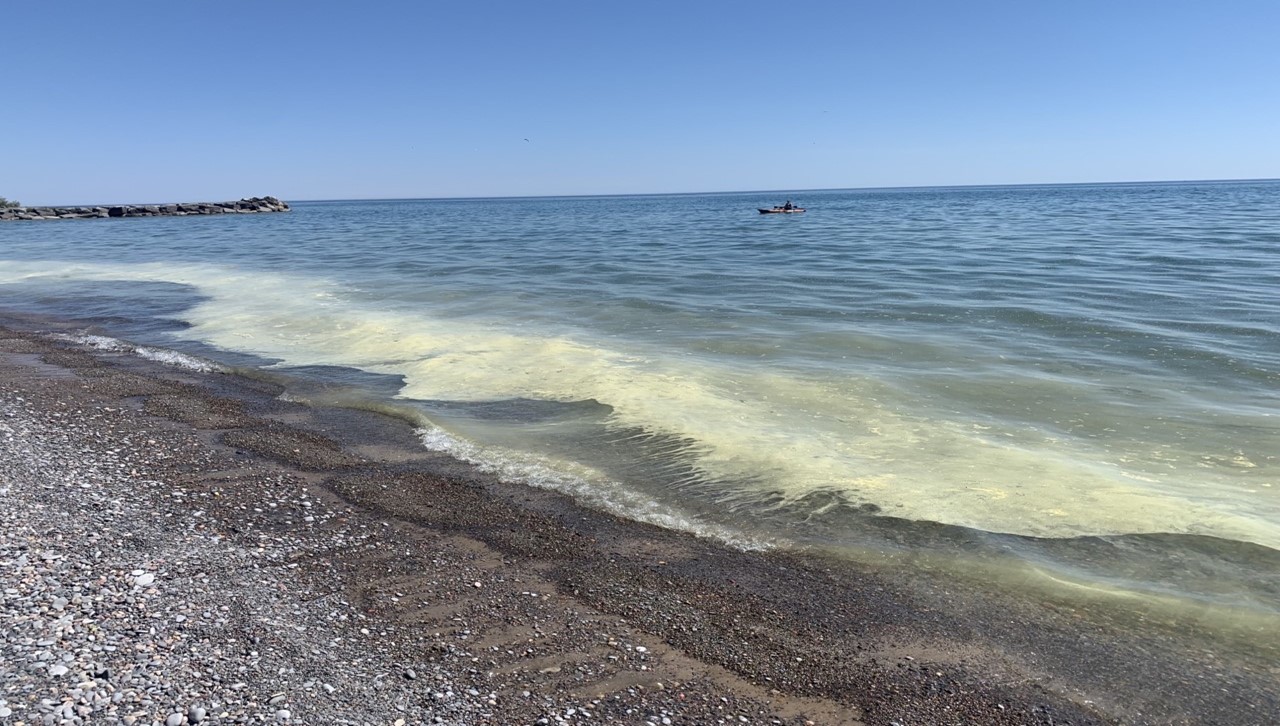
Yellow Scum (Pine Pollen)
The mustard yellow scum which may be seen in early summer on the surface of lakes and along their shorelines is a product of Mother Nature, not industry.
Environment Ontario’s Water Resources staff explain that the yellow scum, most prevalent in the month of June, floats on the surface of water or accumulates along shorelines and beaches. It is due to the presence of pine pollen or pollen from other trees and should not be mistaken for algae or an industrial waste.
In most instances, pine pollen will not be a health hazard. It will probably be blown or washed away when the wind changes direction and will eventually break down or become trapped in the sediment at the bottom of a watercourse. The condition is seasonal, and should begin to taper off in early July of any year in which it appears as a problem.
For more information contact your local Ministry of Environment, Conservation and Parks
Contact Our Team
We’re here to help. Reach out and we’ll respond as quickly as possible.